Showing posts with label life. Show all posts

Wednesday, November 20, 2019

Really Bad Car Wreck

No, not mine.  I'm talking about the Presidency of Donald Trump.


There are a lot of similarities though.  Sure I was on a busy highway but never expected to be hit because I was being careful.  Such was the 2016 election.  We knew he was running but nobody expected he would actually get elected. Nobody took his candidacy literally-he'd been a democrat, he is a failed businessman, and his personality was never conducive to being a world leader.

Then BAM!  We were struck while unsuspecting.  We got rear-
ended, as it were.  At first we didn't understand how it happened, or what impact it would have on our daily lives.  It took time for the real damage to show itself.  Like my own brain injury, the country couldn't make sense of much, and our personality changed.  We forgot things.  We couldn't find the right words.  Our self esteem was damaged as well.  We went into a deep depression and were unable to function like we needed to.


Now, years later-in my case two, in his case three, we've had a chance to understand what happened and what the effects were.  We've started to see more clearly.  We've asked questions of the experts so that we can fully understand what is happening.  We've healed enough to come out of our blue funk and walk, crippled, into life again.  We do it with the goal of not just being functional, but being better than ever.  Stronger.  Smarter. More resistant.

We, my fellow Americans and I, have plateaued.  We're not healing any more, or at least are healing very slowly.  New injuries are coming to light that have to be dealt with.  New strategies for a return to what we once were have been embraced.  It's excruciatingly slow.  We continue to do our necessary therapy but it's simply a matter of survival.  Like I have, it is time that my countrypersons fight back.  Resist. 

It is also imperative that the person who caused this life changing, nearly deadly, car wreck is held accountable.  Maybe there's no financial reward, but there is a satisfaction in making our point and maybe preventing the perpetrator from harming someone else.  That's what this impeachment is about-holding accountable a person who injured us, possibly permanently.  The physical injuries will heal, but the post-traumatic stress disorder will have to be dealt with for quite some time.

Don't ignore that.  As certain as I am about my name, I know that the US is suffering from PTSD regardless of where your political leanings lie.  Republicans are injured just as much as democrats.  We are all Americans.  We need to work together to heal both sides.

I'm driving again, at least during the daytime.  I still have a great deal of pain and my mobility is limited.  There are things I can't do, but have learned to reach out and ask for help.  Americans must do this as well-as individuals as well as Americans in general.    We must take as many precautions as possible to keep from being inured in the future.  We have to get back into that which traumatized us.  We have to survive, and we have to heal, and we have to get back to the people we were before this accident.

I do think of it as an accident.  It happened when we got lazy and
weren't looking, which makes us as culpable as the perpetrator.  Even radical Republicans got broadsided by who they thought would be their savior.  Be kind to each other.  Heal.  Don't rip the scabs off.  Seek help from professionals.


Don't let this kick you in the ass for life.

Wednesday, October 30, 2019

Two Steps Back

The other day did something I shouldn't have.  I shied away from a frank answer.

Those of you who know me know just how rare that is.  Usually, I'm TOO frank.  In this special season, it's the absolute worst time to not be honest.

I am a witch.

While I do own a witch hat (or two). a couple of cloaks, and several brooms, that isn't the kind of witch I'm talking about.  Mine is a spiritual journey.  I was born into it but didn't realize that until I was a full fledged, married, mom of two, adult.   One doesn't "become" a witch.  There's no formal process, no courses, no instructions or mentors, unless  you need that and reach out.  Being a witch is more about absolute freedom, responsibility, and a deep thankfulness.  It is in me; not like when I was young and was "in a church".

While I don't believe in the usual concept of a singular, male deity, I won't ever try to convert you.  It simply can't be done.  Being a witch is deeply personal and unfortunately, due to the stigma, something most keep hidden.

The persecution of witches goes back centuries.  When Christianity became mostly puritanical, witches were not only shunned but some even killed.  The term "witch hunt" derives it's meaning from the act of going out and finding witches in order to kill, shame, or criticize them.  It's done without any misbehavior on the part of the witch.  It simply demonizes those who are practicing a different religion.


Witchcraft isn't demonic.  We don't believe in heaven or hell, so the idea of worshiping the devil is ludicrous.  The pentacle, which most witches use, is a pentagram inside a circle.  It is a sign of the faith in nature and the deity symbols we appreciate, as well as a protection from evil.  Today, the pentagram is the most commonly used symbol of Wicca. Some, most often post-Gardnerian wiccans imitating Taoism, associate the five points of the pentagram with the four classical Greek elements (fire, water, earth, and air) and spirit. This is how I use it.  There's a really good website on pentagrams here.


Like organized religions, there are lots of ceremonies.  By the same token, there is no "rule" that you have to do any, or perform anything.  The basic beauty of Wicca (modern pagan witchcraft) is that it is deeply personal.  It is a bond between your human heart and those of the gods and goddesses-which can either be symbolic deities or actual ones.  You don't have any pressure to proselytize  and you don't have any fear of someone with more experience being judgmental.  

Your ceremonies can be as simple as a silent prayer or as elaborate as encompassing very special elements.  It is entered into with a sense of peace as well as a sense of urgency.  Most* begin with drawing a circle, either tangible or in your mind, that creates a boundary between the sacred space and the ordinary world.  

A few days ago, in McDonalds, a woman approached me and asked if I was a witch.  I'm relatively certain she was only curious, but you never know.  Her question was prompted by the pentagram tattoo on my hand.

If I had not been wearing a coat, she would also have seen the tattoo on my left arm.  This is  an  ambigram called the illuminati diamond, created for the book Angels and Demons.  While not a "real" wiccan symbol, it incorporates the elements in a modern style that I really relate to.  My good friend Mike Lang in Ohio did a fantastic job on this one.


I disappointed myself in answering this lovely young woman.  I deflected the answer and instead said something along the line of "isn't that a great tattoo? I love the color."  She was working at McDonalds at the time and blessedly got called away just at that moment. 

Why did I hesitate?  Because still today "witches" are viewed as evil.  Most organized religions, although the mythology and premise is the same as the pagan, do not support or even tolerate witchcraft.  Certainly it's not as stressful as coming out as LGBTQ, but the entry level fear and dread are the same.  The thing is, I though I was past that.

There's more work to do.


*Some Wiccan's start with a ritual bath, a smudging, or other method of clearing "bad" energy out of the sacred space.  Some will also create an altar.

Tuesday, August 6, 2019

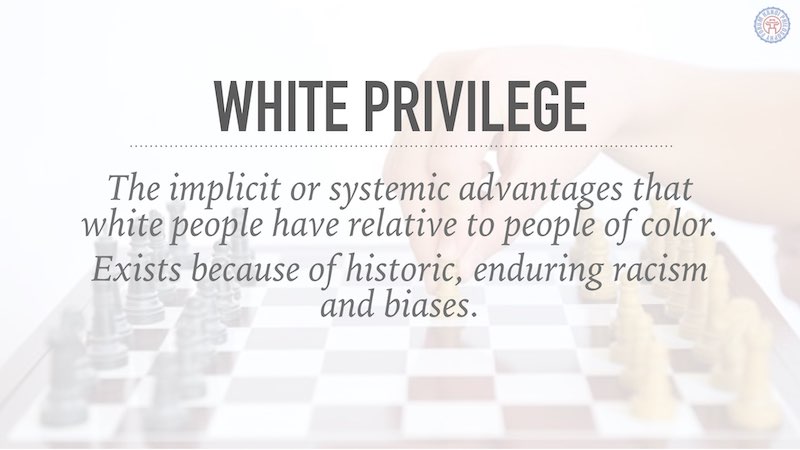
The Idea of Privilege

My Assessment
I've spent a great deal of time contemplating the idea of privilege.  As a white person, I'm often told I have always had privilege.  As an American I'm often told I have always had privilege.  I've been exploring this, wanting to give the idea of my privilege the attention it deserves, and assess how it affects my view of things.

First, I do absolutely agree that the idea of "white privilege" exists.  I also agree that sometimes, especially when dealing with racists, I hold a great deal of white privilege.  It ends there, however.  I've never been given anything because I am white.  No doors or opportunities have opened because I am white.  No economic benefits have been mine because of my race.  That said, I do know that sometimes happens.  It just hasn't happened in my world.

Growing up white and poor isn't really all that different from growing up black and poor.  You simply don't have what others have; not because of your race but because of your circumstance and in this case color does not directly affect my circumstance.  In fact, when race is factored in, I have had certain DISadvantages. 

First, there is the idea of giving opportunity as part of quotas and "affirmative action".  I believe that programs like this have run their course of usefulness.  It's time that we are all treated equally.  If a person of color is more qualified (or more needy, depending on the award) then by all means that person should be chosen over me.  I come from an era where persons of color were given priority in college placement and financial aid.  I wasn't privileged beyond having the guts to try college anyway.  That is not racial, that is environmental.  My upbringing, and to a certain extent my culture, made me tough and curious.  That isn't racial.

I'm told, in argument, that my culture is what gave me privilege.   If poor West Virginia is privilege in any color, I will eat my hat.  There are, of course, pockets of privilege culturally--some because of being white, some because of not being white, but generally, my "culture" gave me no privilege.  There are a great many black West Virginians my age who are far more successful and accepted than I am.

Some argue privilege in expectations.  They say white persons are expected to be successful and black persons are not.  To an extent, that might be true, but there are other sides of that.  Because I was a smart white teenager with a great deal of "drive" it was expected that I would attend college, graduate (probably with honors) and go on the have a financially successful life. There's a lot of pressure there, and I wasn't up to it.  That was 40 years ago, and right now, being a smart, driven black person has a better chance than I ever did with a bit less expectation because we are conditioned to believe that person is somehow disadvantaged.   Combined with quotas, this person of color *may* actually have more privilege than I did; and far less pressure to succeed.  When a person of color doesn't succeed as expected, they (and many others) can play the race card-"I was destined to fail because of my color".  No, the truth is we all fail at some point.  I failed college quite grandly, regardless of race.  I also watched persons of color with lesser academic credentials be accepted into universities I couldn't get into; because of color.  I watched persons of color be handed financial supports I wasn't entitled to; because of color.

Fast forward to adulthood, and when things went south in my marriage nobody ever said it was because either of us were black.  When I moved with my two small children to a trailer outside of town, I wasn't allowed to live there because I was white.  I didn't get welfare because I was white.  What I got was massive amounts of disappointment and judgement.  Thirty years ago even an abused white woman was expected to succeed-because she was white.

Twenty years ago, with a new husband and lots more experience and maturity, I started a new life in Toronto, Ontario.  It quickly became apparent that there were vast numbers of people of color and not quite so many white, at least in my environment.  Less than ten percent of the families in my high rise apartment building are white.  My son has never been in the majority in school or in play.  Being white has not afforded him any privilege.  In fact, because he is white, some persons of color have targeted him for theft or bullying because they have been taught that white people have things that black/brown people don't.

Citizenship is also an issue.  Because I am an American, and right now that's not very popular thanks to the sitting president, I am sometimes bullied.  My daughter, who is white as snow and 110% southern american, has had it far worse than I have because she was a teenager here.  I have never seen a person of color bullied because of their immigration status or citizenship.  Here in the GTA, the group with the greatest amount of "privilege" would have to be Asians.  Overall, Chinese and Indian and Pakistani and Korean  have a much better life than the rest.  I don't hold that against them--they have families and others who give direct support because of their culture, not their race.  They work hard, invest well, and take care of others.  I can certainly see, however, why they are thought of as privileged; they own most of the business and property in the GTA.

It is that culture of support that I believe gives success. Everyone who has needs that aren't being met is likely to see the "haves" as having some kind of privilege.  Because we have a comfortable income (because we don't own property, primarily) I can see how people would think we are privilege. That's jealousy.  That's a fairly normal reaction, give the circumstance.  Those on the outside haven't seen our struggles to get where we are and the challenges we face every day to maintain that standard.

I have a friend who is extremely successful.  He is mid 30's and mixed race, but definitely considered a person of color.  He already has a six figure income, has traveled the world and excelled in his academics.  He may have had more privilege than my daughter of the same age, but not because of race.  He had it because his parents, a white woman from the Canadian prairies and a black man who immigrated from South Africa during Apartheid, worked hard to give him the things they didn't have.  Likewise, that same daughter of mine, has a house, is expecting a second child, and does not have to work because her husband has a great job.  She may be viewed as privileged because of all that; so many others don't have the opportunities she has had.  Those opportunities, however, were not because she is white.  To claim she has "white privilege" takes away validation for rising above her failures, meeting challenges head on, and being successful in the face of almost assured failure.

I think it's past time for us to stop throwing accusations of racial
privilege.  If we want to be treated equally, we have to present ourselves as equals.  When you devalue yourself because you think others have had more opportunity than you have, you fail from the outset.  When you devalue others the same way, you alienate them from every being supportive of you, regardless of color.

If we want to be treated equally, we need to truly treat (and perceive) others as equals.  I don't argue that white privilege doesn't exist.  Certainly in some circumstances, especially in law enforcement and bigots, it most certainly does.  My objection is to  a sort of "reverse racism" where all white persons are viewed as having privilege over all persons of color.  Just as bigots need to learn a better way, persons of color who are feeling disenfranchised need to truly assess what causes them to feel that way.  We need to start talking about "isms" that don't involve color.

This is privilege.

This is not.

Thursday, July 11, 2019

A Crisis is a Crisis

I recently realized that I was once someone's midlife crisis.  It kind of bums me out, because this was a man I thought I was in love with, and who loved me too.  It was already complicated, as both of us were married.  He told me I made him feel good. 

We met and fell hard.  It honestly did not seem like a purely sexual thing.  He was successful and intense.  I was bored and picky.  We didn't jump right into bed, but rather talked and talked and talked until we couldn't put it off any longer.  


I knew he had never cheated before.  I had.  He was mid 40's, I wasn't.  We were an unlikely pair, and it wasn't something we were going to divorce for.  We honestly thought we could do this side thing forever.  We both had kids, and jobs, and lives.  We just wanted to feel good again.  Talking to each other gave us that and much more.  Eventually, we went to a local hotel and to be honest, it was magical.  At least at first.  Then, immediately after consummation, he was zapped with a hearty dose of guilt.  He apologized and we left.  In the parking lot he apologized again, asked if I was okay, and drove out.  Then he stopped, got out of his car, and looked back at me.  It was one of three movie-worthy moments of my romantic life, actually.  Then he got back into his car and drove away.  I never spoke with him again.

His guilt was too much for him to bear, and he ended things very politely and with great care.  I appreciated that then and still do.  I wanted to be angry, and I definitely hurt, but I couldn't fault him for following his morality.  I couldn't fault him for being civil.  I wanted to, basically, fault him.  I was more angry about that than the breakup.  We had exchanged a couple of "exit interview" type letters, so there was the elusive closure folks talk about.  We walked away, albeit reluctantly, for the greater good.

For the next 5 years I mourned him.  I looked for him everywhere.  I wrote poems about loss and hurt.  I followed his career as best I could, and silently celebrated his successes.  As my marriage fell apart I desperately hoped--believed, actually--that in the end we would be together somehow.  Every man I got close to was compared to him.  Relationships were judged against how I felt during time with him.  I occasionally wrote to him, but he didn't answer.  I'm sure he worried I would interfere with his life in some way, but I didn't.  We ran into each other a couple of times, in passing, but didn't show we even recognized each other.


Then one day, after the internet became a huge part of my life, I looked for him there.  He was still married, still working, still in his old life.  I felt a little pity, as I knew he probably wasn't getting all he really needed.  I felt a little sad too.  Then came the illumination.  The search results yielded a few things that were actually related to him, but also tens of thousands of things that were not about him.  One of those things, coincidentally or not, was an article on midlife crisis.

I read the words and realized that's what the whole thing was an emotional crisis of identity and self-confidence that can occur in early middle age."  Further reading on the subject showed that "midlife" was about 45 years old.  The term was coined in 1965 as a psychological issue, primarily in men although the vast majority of men never had it.

The dictionary defines this as
 an emotional crisis of identity and self-confidence that can occur in early middle age.
Typically it starts with some sort of major stressor.  In his case, it was a significant job change.  A few months earlier he had lost his father.  One of the things that struck me in the American Psychological Association notes is that men believe their life needs to be lived as expected.  This was actually something we talked about several times--he felt there were certain things a man/son/dad/husband/boss had to do, to be, and he wasn't living up to that.

Wikipedia says that an American cultural stereotype of a man going through a midlife crisis may include the purchase of a luxury item such as an exotic car, or seeking intimacy with a younger woman. He already had a cadillac. I guess I was the other option. Those experiencing a mid-life crisis may feel:
  • a deep sense of remorse for goals not accomplished
  • a fear of humiliation among more successful colleagues
  • longing to achieve a feeling of youthfulness
  • need to spend more time alone or with certain peers
  • a heightened sense of their sexuality or lack thereof
  • ennui, confusion, resentment or anger due to their discontent with their marital, work, health, economic, or social status
  • ambitious to right the missteps they feel they have taken early in life


I think that's where I missed something.  He had told me he wanted to feel handsome, sexy, smart, important, worthy, and many other things.  He told me I gave him that.  I guess I just didn't realize he NEEDED those things, badly enough to compromise his morality.  A website called "Verywell Mind" (as if that actually exists!) says that midlife crisis may well be the unhappiest time of a person's life.  I definitely sensed that in him and was pleased to be able to help him feel better.  That was actually one of the things I was missing-the feeling of being needed.

Top Ten Signs of Midlife Crisis (according to Personal Tao)

  • Desiring to quit a good job.
  • Unexplained bouts of depression when doing tasks that used to make you happy.
  • Changing or investigating religions, churches or philosophy.
  • Change of habits. Activities which used to bring pleasure now are boring. Unable to complete or concentrate on tasks which used to be easy.
  • Excessively buying new clothes and taking more time to look good.
  • Wanting to run away to somewhere new.
  • A desire or obsession to get into physical shape.
  • Irritability or unexpected anger.
  • Leaving (Mentally or Physically) family or feeling trapped in current family relationships.
  • Looking into the mirror and you no longer recognize yourself.


The ones in italics are the ones that seem to apply here.  Those are things that people with depression have pretty much all the time, which  may be why I didn't see them as "crisis".

Midlife affairs are common.  Just the fear of an affair can ironically destroy a relationship. Even worse most people aren’t prepared to deal with the aftermath of an affair. The turmoil of emotions between you and your partner (and the extra partner) creates a blizzard of conflicting problems.   It also destroys who you are at your core the first time you do this.  Instead of finding purpose, you end up feeling even worse.
A midlife affair typically lasts between 3 months to two years. Virtually none of them last past two years.  There are a few exceptions, and special circumstances, but it's not a long term thing.  And the longer it goes on, the more pain when it's over.  I think in that moment, when he realized that what we had was an affair, the culmination of all those things hit him like a freight train.  I can forgive him for that.
An affair is the symptom of deeper problems within a marriage.   It's crucial to address the cause at it's root, or you will never find any sort of happiness.   It's also deeply personal, so while friends might mean well they can't know what you are going through.  Ignore any advice and follow your heart and the feedback from your partner.  It takes skill, deep patience and kindness to work thru the complexities of a midlife affair gracefully.  Much of that "work" isn't done just by you.  You have to own not only how you got to that point but what you honestly need to get past it.  Forgiving yourself for a perceived weakness is probably the hardest, and in fact was likely the stressor that started you on this path to begin with.  We are all too self critical, and this fellow was the worst.  I'm certain he never told a soul.
It might be necessary to seek some professional help.  I did, eventually, and it got me to the attitude I have now about the whole thing.  It happened.  It ended.  Let go.  Seems so simple, but sure wasn't.  The loss of that relationship was my own crisis that I had to deal with silently for years.  I mourned it far more than the loss of my marriage-perhaps because I valued it more.  Knowing that truth about myself was crucial to understanding what happened.
Healing an affair, no matter what your role in it,  is a process that takes a while to fix.  All these years later I'm still processing.  I've stopped mourning, but I seek to understand everything about it-from my own motivation to step away from the marriage to his ability to resolve this and go own with his.  I seriously doubt he ever told his wife, or that he got any sort of professional help.  More likely he suffered in silence until he managed to stuff it so far down it never came up again.
If you find yourself the spouse of a cheater, there will be  a lot of soul searching.  Can you get past the anger and despair and need for giving punishment?  Most can't, not really, and they just end up delaying the end of the marriage for sometimes years.  Even if you consciously forgive, there may still be long term, horrible feelings tucked away that could resurface at any time. Those same buried feelings may tempt you to walk away from your own values at some point.  Most partners will lie or hide the problems even deeper. Prepare yourself before any revelations or confrontations.
Never confront the person your partner is having an affair  with or  the spouse he's cheating on.   Just don't do it.  It will only make things worth all the way around.  
I often think that if my husband had found out about the affair he wouldn't do anything, and by not doing anything it would only have made things emotionally worse for me.  Being ignored means that everything stays the same, and that he didn't have enough respect or investment to deal with it.  He wouldn't have done confrontation well, so I'm sure he would have avoided that at all cost. Additionally, he would never have addressed the issue that was at the core of my infidelity.  Ironically, it was that he didn't seem to have respect or investment.  Both of us would have to decide to start over, with forgiveness and trust.  That clearly would not be possible, so it was never attempted.
Key to resolving an affair is to remove judgement.   This includes everyone understanding that there is no "blame"or guilt for ourselves or our partners.  That's incredibly difficult.  You have to completely let go of ALL the relationships and establish a new friendship with your partner.  It's a lot of work and often can't be done while still married and/or living together.  Do what you have to do if keeping the relationship is important.  If it isn't, then walk away and let the other person recover and get back to happiness.
You have to do this in the relationship with yourself as well.  And on top of that is the grief of hurting TWO people--your partner and your "extra".  Not everyone has that strength and will spend a lifetime in secret guilt.  It's important to understand that wishing for  a happy ending is not the same as actively changing your life to create a it.  It takes time. For most people, this will be the hardest test they ever face in their life.
As the "other woman" I had to not only forgive myself (and him, and even my husband) but I had to allow myself to grieve.  Doing this privately, silently, was brutal.  It wasn't until I sought counseling that I was finally able to process everything.  I still grieve the loss of the relationship with that guy.  I still accept that if he were to show up today I would step right back in.  I'm still working through that.  But the guilt is gone.  The anger is gone.  The sense of betrayal on all sides is gone.  People often tell me they think I am brave, usually based on whatever illness or abuse I have survived.  It is the ability to get through the losses involved with this affair that required the most bravery.  I had to (have to?) live my life and grow, and hanging on to any of the emotion hinders that.  As painful as this was, as shredded as I felt, it did give me some wisdom.  I did make me more compassionate.  It did change me in positive ways.
More reading
https://www.apa.org/
https://en.wikipedia.org/wiki/Midlife_crisis
https://books.google.ca/books?id=y5nTBgAAQBAJ&dq=Massachusetts+General+Hospital+comprehensive+clinical+psychiatry&redir_esc=y&hl=en
https://personaltao.com/midlife-crisis/

Greta's World

I've been thinking a lot about Greta Thunberg.  She will be 17 in a couple of weeks and is an amazing young activist.  Hats off to her p...