Showing posts with label Canada. Show all posts

Saturday, November 2, 2019

Survivor Anger


I’m so angry.

I just saw a piece on tv about a guy who survived cancer and his role model, a young girl, did not survive hers.  He talked about how he didn’t have the typical “survivor’s guilt”-the idea of feeling guilty after surviving when so many don’t.  The idea of not being worthy.  The notion that you don’t deserve to be the one to live.  I had a bit of that in the year after my chemo ended and I continued to have “all clear” on my follow ups.

This guy, who is a fighter pilot and basically a (now) healthy young guy with a family, talked about how he didn’t have that.  Instead, he has something he calls survivor’s responsibility.  He believes that he, and others, have a responsibility to “live their best life” and “live with intention”.  Well good for him.  I have a big dose of can’t.
Most people would never guess I battle with depression.  I’ve been upbeat and productive most of my life.  It hasn’t come easily. There were suicide attempts, long stretches of not being able to function, and the kind of muddled thinking that comes with a mental illness.  In my opinion, the depression is/was MUCH more difficult than cancer.  Maybe that is because the cancer went away.

I will have to be treated for depression the rest of my life.  Chemotherapy, then a car wreck with some brain damage, then life threatening pneumonia all in the span of just under two years has really triggered this round of intense depression.  I know it’s chemical.  I know never to quit taking my drugs.  I’ve had years of therapy and continue to see someone since the wreck.  I don’t feel like I’m “living my best life” by any stretch.

I do think I live “with intention” in that I do it on purpose.  I could have-maybe should have-died on so many times.  Most of the time I’ve done it out of being just plain stubborn.  Choosing to do chemotherapy when you are someone with chronic depression was tough.  I wanted nothing more than to be done with this life, but I have children, and a husband, and at the time had two elderly parents.  I had responsibilities and I wasn’t going to let those people down.

I went to 6 rounds of chemo.  Getting the treatment isn’t bad-it’s how you feel afterward.  The exhaustion is incredibly strong.  The hair loss, the being careful of germs, the inability to function independently-those are the real challenges.  And it took about a year after diagnosis to even begin to feel better.  Then I went back to work, very part time, at a job I dearly loved.  Three months later I was sidelined again by a car wreck.  This time it was more than physical.  I lost my ability to make decisions, to decide value, and to plan anything.  That, on top of constant pain, have made life pretty awful from day to day.  It certainly doesn’t help make me want to live.  It definitely isn’t “living my best life”.

All this is only my latest challenge.  I’ve already survived being bedfast for six months in a body cast at about age 9.  I’ve conquered the upheaval of my parents’ divorce, relocation in the middle of high school, and failing out of college my first year.  I lived through an abusive first marriage and the death of my first child.  I lived through being a single mom while going back to school and fighting for child support and custody and being stalked by my ex.  I stared down the barrel of his .357 and did not have a shred of fear. I reinvented myself over and over and over again, always shining through.  I’ve managed to survive moving out of my country, standing up to prejudices, an horrendous couple of Presidents, 9/11 and a surprise pregnancy at 38 years old.  Then the cancer and all that came with and after that since 2016.


Far too many of my friends have died in the past three years as well.  It’s an abnormally large amount, even in numbers rather than percentage.  Then my dad died, and I’m still “getting over” that.  Talk about abandonment issues! 

Good things have happened as well, so don’t think it’s been all bad.  I have a couple of granddaughters who I absolutely adore.  I’m closer emotionally to my three kids than ever before.  I have the unconditional love of a pair of schnauzers every minute of every day.  I’ve had the opportunity to teach, challenge, and protest with and for not only future generations, but past ones.  I have a fascinating career-even if it rarely pays a dime-and a great deal of public recognition.  I get to travel to speak at conferences, write books and watch people actually buy them, and entertain friends by cooking, which I truly love.  I have gone on two fabulous Caribbean vacations at Sandals and have booked two more in the future.  I have a husband who loves me beyond reason and a very comfortable lifestyle.  My mom is still in pretty good health as she starts to see her years approach 80 and I adore her wonderful partner.

With such blessings and joy for my life, how could I be depressed?  I am depressed because it is a chemical, physical condition.  It’s not the blues, it’s not sadness, it is the inability to feel content and happy because my brain isn’t getting the glutamate, dopamine, serotonin and norepinephrine it needs.  As I have aged, the need for those chemicals has changed.  On top of that, chemotherapy for lymphoma completely disrupted my system.  My body and its circumstance has made me depressed.  We’re still trying different combinations of medications and diet to address the imbalances, but it’s highly individualized and fairly complex.  It also leaves me very vulnerable.  Thankfully, because I have also had talk therapy, I understand all this and am safe in spite of myself.

That doesn’t give me any extra motivation though.  It doesn’t let me see the benefit of quitting smoking.  It doesn’t entice me to exercise.  It doesn’t get me out of bed and into the shower.  It doesn’t let me know the reward of a job well done.  It doesn’t let me hope I will get through the current challenges.  It also doesn’t tell my brain I can’t do all of those things, so I end up frustrated and not finishing projects-even the projects I truly enjoy when the chemicals are more balanced.

I’m vividly aware that I am not living my best life.  I also don’t have survivor guilt.  What I have is survivor anger.


Tuesday, August 6, 2019

The Idea of Privilege

My Assessment
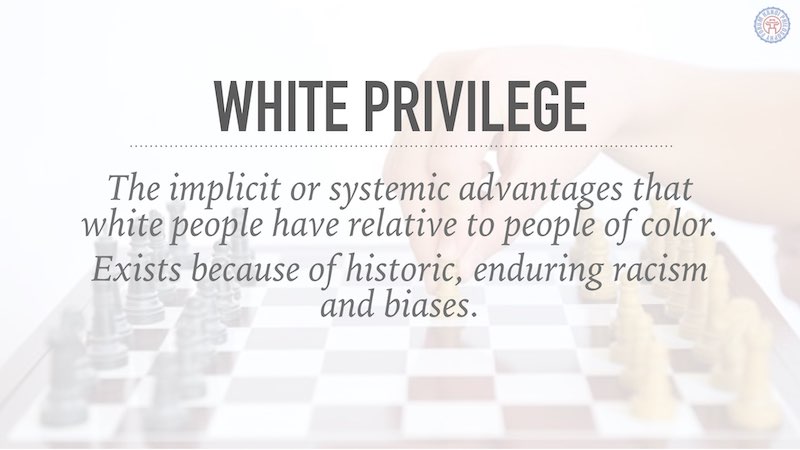
I've spent a great deal of time contemplating the idea of privilege.  As a white person, I'm often told I have always had privilege.  As an American I'm often told I have always had privilege.  I've been exploring this, wanting to give the idea of my privilege the attention it deserves, and assess how it affects my view of things.

First, I do absolutely agree that the idea of "white privilege" exists.  I also agree that sometimes, especially when dealing with racists, I hold a great deal of white privilege.  It ends there, however.  I've never been given anything because I am white.  No doors or opportunities have opened because I am white.  No economic benefits have been mine because of my race.  That said, I do know that sometimes happens.  It just hasn't happened in my world.

Growing up white and poor isn't really all that different from growing up black and poor.  You simply don't have what others have; not because of your race but because of your circumstance and in this case color does not directly affect my circumstance.  In fact, when race is factored in, I have had certain DISadvantages. 

First, there is the idea of giving opportunity as part of quotas and "affirmative action".  I believe that programs like this have run their course of usefulness.  It's time that we are all treated equally.  If a person of color is more qualified (or more needy, depending on the award) then by all means that person should be chosen over me.  I come from an era where persons of color were given priority in college placement and financial aid.  I wasn't privileged beyond having the guts to try college anyway.  That is not racial, that is environmental.  My upbringing, and to a certain extent my culture, made me tough and curious.  That isn't racial.

I'm told, in argument, that my culture is what gave me privilege.   If poor West Virginia is privilege in any color, I will eat my hat.  There are, of course, pockets of privilege culturally--some because of being white, some because of not being white, but generally, my "culture" gave me no privilege.  There are a great many black West Virginians my age who are far more successful and accepted than I am.

Some argue privilege in expectations.  They say white persons are expected to be successful and black persons are not.  To an extent, that might be true, but there are other sides of that.  Because I was a smart white teenager with a great deal of "drive" it was expected that I would attend college, graduate (probably with honors) and go on the have a financially successful life. There's a lot of pressure there, and I wasn't up to it.  That was 40 years ago, and right now, being a smart, driven black person has a better chance than I ever did with a bit less expectation because we are conditioned to believe that person is somehow disadvantaged.   Combined with quotas, this person of color *may* actually have more privilege than I did; and far less pressure to succeed.  When a person of color doesn't succeed as expected, they (and many others) can play the race card-"I was destined to fail because of my color".  No, the truth is we all fail at some point.  I failed college quite grandly, regardless of race.  I also watched persons of color with lesser academic credentials be accepted into universities I couldn't get into; because of color.  I watched persons of color be handed financial supports I wasn't entitled to; because of color.

Fast forward to adulthood, and when things went south in my marriage nobody ever said it was because either of us were black.  When I moved with my two small children to a trailer outside of town, I wasn't allowed to live there because I was white.  I didn't get welfare because I was white.  What I got was massive amounts of disappointment and judgement.  Thirty years ago even an abused white woman was expected to succeed-because she was white.

Twenty years ago, with a new husband and lots more experience and maturity, I started a new life in Toronto, Ontario.  It quickly became apparent that there were vast numbers of people of color and not quite so many white, at least in my environment.  Less than ten percent of the families in my high rise apartment building are white.  My son has never been in the majority in school or in play.  Being white has not afforded him any privilege.  In fact, because he is white, some persons of color have targeted him for theft or bullying because they have been taught that white people have things that black/brown people don't.

Citizenship is also an issue.  Because I am an American, and right now that's not very popular thanks to the sitting president, I am sometimes bullied.  My daughter, who is white as snow and 110% southern american, has had it far worse than I have because she was a teenager here.  I have never seen a person of color bullied because of their immigration status or citizenship.  Here in the GTA, the group with the greatest amount of "privilege" would have to be Asians.  Overall, Chinese and Indian and Pakistani and Korean  have a much better life than the rest.  I don't hold that against them--they have families and others who give direct support because of their culture, not their race.  They work hard, invest well, and take care of others.  I can certainly see, however, why they are thought of as privileged; they own most of the business and property in the GTA.

It is that culture of support that I believe gives success. Everyone who has needs that aren't being met is likely to see the "haves" as having some kind of privilege.  Because we have a comfortable income (because we don't own property, primarily) I can see how people would think we are privilege. That's jealousy.  That's a fairly normal reaction, give the circumstance.  Those on the outside haven't seen our struggles to get where we are and the challenges we face every day to maintain that standard.

I have a friend who is extremely successful.  He is mid 30's and mixed race, but definitely considered a person of color.  He already has a six figure income, has traveled the world and excelled in his academics.  He may have had more privilege than my daughter of the same age, but not because of race.  He had it because his parents, a white woman from the Canadian prairies and a black man who immigrated from South Africa during Apartheid, worked hard to give him the things they didn't have.  Likewise, that same daughter of mine, has a house, is expecting a second child, and does not have to work because her husband has a great job.  She may be viewed as privileged because of all that; so many others don't have the opportunities she has had.  Those opportunities, however, were not because she is white.  To claim she has "white privilege" takes away validation for rising above her failures, meeting challenges head on, and being successful in the face of almost assured failure.

I think it's past time for us to stop throwing accusations of racial
privilege.  If we want to be treated equally, we have to present ourselves as equals.  When you devalue yourself because you think others have had more opportunity than you have, you fail from the outset.  When you devalue others the same way, you alienate them from every being supportive of you, regardless of color.

If we want to be treated equally, we need to truly treat (and perceive) others as equals.  I don't argue that white privilege doesn't exist.  Certainly in some circumstances, especially in law enforcement and bigots, it most certainly does.  My objection is to  a sort of "reverse racism" where all white persons are viewed as having privilege over all persons of color.  Just as bigots need to learn a better way, persons of color who are feeling disenfranchised need to truly assess what causes them to feel that way.  We need to start talking about "isms" that don't involve color.

This is privilege.

This is not.

Friday, July 26, 2019

Housing Toronto


I've lived in Toronto (Scarborough) for 19 years now. In the same apartment. In that time, we've had few improvements (except the lobby, which they seem to do every year). We got new balconies and new toilets. I also got lower kitchen cabinets (which do not match the sagging uppers). In all fairness, aside from the cabinets, I haven't asked for repairs. I don't trust management/maintenance in my home. That came about when the new owners, CAPREIT, bought the building. We had some sort of issue--a leaky bedroom I think--and had asked for them to fix it. Never mind that it took two years to figure out and try to repair it, when they did come try something they only painted one wall and half the ceiling. And it still bubbles the paint, so I know it isn't fixed. But I digress. One day I woke up, in my bedroom in bed, only to find the maintenance guy standing there. Two violations here--no 24 hour notice of entry as required by law, and no knocking on the door. Since then, I have installed a doorbell (just in case he did actually knock on the outside door) and been very vigilant with the building's series of supers. I don't remember when they bought the building, but it's been over 5 years. 

In those nineteen years, our rent has consistently gone up. Additionally, they removed the pool that was here and fully functional for many years after we moved in. That was not taken into consideration (I see it as property value) when the rent increases came. It has increased maybe an average of 2% each year.


When CAPREIT bought the building, one of the first things they did was make some money saving changes. When people move out, the next tenants have to pay for electricity and water on their own. So long as we are here, it is included in ours as originally leased. They tried to make us change that but were not offering a significant reduction in rent so we refused. They have also tried adding amount meters but to my knowledge that hasn't been successful. We pay an moderate additional amount for one underground parking space. All in all, the increases in rent have probably increased it about $200 a month in 19 years. We pay a little over $1500 for our three bedroom, utilities included, 8th floor corner overlooking some green space and a major street. Our building is one of four in a sort of cul-de-sac, each housing about 600 people. We are incredibly lucky.

Lucky at $1500 a month? Definitely. Toronto real estate has lost it's collective mind. You cannot purchase a property in the city limits for less than $770, 000. And at that price, it's mostly one bedroom condos with about a 30 minute commute. Most homes, really basic ones, list for over a million. The house across the street from us is for sale, as is at just the value of the land, for $1.3 million. Mortgages over one million start with a down payment of a minimum of two hundred thousand dollars. 


I can buy a three bedroom house on the beach in Wilmington, NC for less than a down payment on a 2 bedroom, one bath home at the edge of the town limits. I also wouldn't be paying $3 for a loaf of bread, $5 for a gallon of milk, or $4.50 a gallon for gas. I also probably wouldn't get shot, stabbed, robbed, or run over as a pedestrian, so I'd likely sleep better. I would desperately miss the great sales, amazing live theater, and terrific multicultural experiences, but it would be worth it. I can always vacation in Toronto.

I'm going to have to bite the bullet and ask for some repairs.
Hubby has at least five more years before retirement, and even then isn't on board with moving to North Carolina (yet!). I've looked at other rental options, and we'd definitely have to downsize to two small bedrooms, lose our half bath, and likely pay our own utilities. With rents on the criteria that we have to have access to transit in such a way that Doug can make it home from work in an hour or less, and that the property must have an elevator if we live above ground level, it just isn't worth moving. That would also be contingent on finding something available as well, and that's not easy. If it were found, we'd be looking at about $2500 per month (plus utilities).

What brought this on was a tweet by Prime Minister Justin Trudeau. Now, I like Justin, he's an OK PM (despite what my husband says) but this tweet set me off like a rocket.

Want to take the next big step in life & buy your first home? The First-Time Home Buyer Incentive will make it more affordable:
🏠Helps with your down payment

🏠Lowers your monthly mortgage by up to
$286/month

🏠Offers a shared equity mortgage worth up to 10% of your home's value

— Justin Trudeau (@JustinTrudeau) July 25, 2019


So I thought that sounded actually doable! Even if we have to do a "shared equity mortgage" , IE the government would own part of our home, it would be worth it. As potential first time home buyers, this sounded like heaven.

I had a look at the program, and the link is below. They start taking applications, Canada-wide, on September 2, 2019. Here's the bones:

  • you need to have the minimum down payment to be eligible
  • your maximum qualifying income is no more than $120,000
  • your total borrowing is limited to 4 times the qualifying income
  • If you meet these criteria, you can then apply for a 5% or 10% shared equity mortgage with the Government of Canada.
Let's break that down. For example purposes, let's assume a 1.25 million dollar home and a combined household income of $100,000. A "qualifying down payment" would be 5% of the price, so you'd need a down payment of $62,500. For most lenders, the down payment is 20%, or $250,000. The governmental part of the mortgage would contribute ten percent, or $125,000. Your mortgage would be on the balance, or $1.062.500, with a monthly payment of about $6200 per month (based on 5% down). If you were able to put put 20% down, your payments would be just under $6000. Every. Single. Month.

There are problems here, right off the bat. First, under the plan you can't borrow more than $400,000 total, or four times your yearly income. It's not clear if that amount would have to include any existing debt like lines of credit or credit cards. That simply isn't possible in Toronto--or any of the nearby suburbs. But hypothetically, when you sell, assuming you sell for more than you purchased your home, you would pay the government ten percent of the current sale value. In other words, if you sell your home for $1.5 million ($250,000 more than you paid for it), you would then pay the Government of Canada $150,000 and they profit $30,000, or 24%. You profit 20% ($250,000). If you pay the government out of your profit, you actually only get $100k--which is probably about how much interest you've paid on your mortgage. Basically, you're no better off than you were at $1.25 million.


(That's Justin, for you Yanks)
Down payment rules in Canada are such that you pay 20% on mortgages of a million dollars or more. So you would be looking at a mortgage in the neighborhood of $6000 regardless. You have a net pay of $6000 per month. (Tax rate for 100K is 28%). Your insurance costs about $300, your drug and dental plan $200, electric $100, $30 for water and sewer. You now have $-630. Commute to work (transit or driving) will cost at least $150 so you are down to $-710--not even doable if you live alone. If you have a spouse and just one child (for which you get less than $200 per month "baby bonus" at that income) You have daycare so you both can work, and that costs at least a thousand a month. You're in the hole over $1500 and you haven't even purchased groceries, let alone saved for retirement or taken a vacation.

I'm guessing the beggars on every corner aren't homeless, but rather home owners. They'd be better off homeless.

Tuesday, April 2, 2019

Finally an American

My son and I went to the US Consulate in Toronto this morning.  It could have been awful.

Since we were unable to get his Social Security number at the SS Office in Dubois, PA (long story that ends with me storming out in tears), we had to get the boy a US Passport.  Ironically, the exact same ID we tried to use for Social Security to prove citizenship and were denied, we quite fine to get a passport.  That document would be the Consular Report of Birth Abroad.

This is a document, or more accurately a certificate, that says that your child is a US Citizen by virtue of a parent being a citizen.  This Canadian birth certificate certifies he is Canadian.  It's rather convoluted but when it all comes out in the wash, he has dual citizenship.

This led to a discussion at lunch with my Canadian husband.  I maintain that our son can never be President (not that he wants to be) because he was not born in the USA.  Hubby countered with "What about Ted Cruz?"  Well he has a point.


Senator Ted Cruz was born in Calgary, Alberta, Canada to a US Citizen mom.  He ran for President of the United States in 2016.  He is the Senator from Texas who recently beat out Beto O'Rourke in Texas for his Senate seat.  O'Rourke, of course, is now running for President himself.


Cruz claims he didn't know he was a dual citizen until 2013.  


This conversation caused me to rush home to do more research.  As it turns out, most legal scholars agree that includes an American born overseas to an American parent, such as Cruz.  Dated Dec. 22, 1970, which is about a month after his birth, it shows that Rafael Edward Cruz was born to Rafael Bienvenido Cruz, born in Matanzas, Cuba, and  Eleanor Elizabeth Wilson, born in Wilmington, Del.  This act made him an American, and being born in Calgary made him a Canadian.  My son, born in Toronto, has exactly the same "credentials", minus dad being born in Cuba.  U.S. law required at least one parent who was a U.S. citizen who had lived for at least a decade in the United States.  Mrs. Cruz and I both fit that condition.  My daughter's child might as well, but son's children will not get immediate citizenship unless he lives in the US for at least ten years.

To further complicate matters, until 1947, people born in Canada were British subjects.  This is one of the challenges to my taking dual citizenship.  My ancestors fought and died in 1776 to be free of Britain.  Can I morally swear allegiance to the monarchy?  When I talk about this to Canadian friends, they laugh it off and some are even stunned to discover that they have, by birth, sworn to uphold the Monarchy.  They say since they didn't have to swear an oath of citizenship, they didn't make that promise.  This is very telling, when it comes to why they don't "get" my reluctance to swear it.  Canada has only been independent from Britain since July 1, 1867.  The Canada Act 1982 which was passed in Britain at the request of the Parliament of Canada, ended power of the British Parliament to amend the Constitution of Canada. It also ended legislation from 1931 that gave the British parliament the general power to pass laws extending to Canada.  Technically, in my opinion, it was at that point that Canada actually became independent.  As of this writing, that was only 37 years ago.  Much too soon to have it's people develop the kind of patriotism known in fifth generation (or longer) Americans.  Heck, they've only had one Queen!  If you really want to get some Canadians riled up, just remind them Queen Elizabeth's constitutional powers over Canada were not affected by the act, and she remains Queen and Head of State of Canada.  Her assent is required on all Canadian laws.

But I digress.  Both confer citizenship automatically to anyone born on land, and to children of citizens even when the birth takes place overseas.  That's how Ted Cruz and my son ended up in this mess.  Ted's reaction was very different from my son's.


 Alberta-born Sen. Ted Cruz has given up his Canadian dual citizenship. The renunciation became official on May 14, roughly 9 months after he learned he wasn't only an American.


This seemed to help settle the political part of this conundrum.  He is now only American.  Does that also entitle him to be president?  By law, he could also be granted citizenship of Cuba. Cuba does not recognize dual (triple?) citizenship, so any other citizenships would have to be renounced to even BE Cuban.   It wouldn't be much more than some paperwork.  Because his parents never filed the form to make him officially Cuban, he dodged the bullet, although in my generation of Bay of Pigs, being Cuban is definitely worse than being Canadian.  Cruz was 4 when the family moved to Texas.

In 2006, Canada’s Liberal Party Leader Stéphane Dion — born in Quebec City and also a citizen of France.  He promised to give up his French citizenship if he became prime minister.  He didn't become Prime Minister.

The US requires its citizens to pay taxes no matter where they live in the world. Canada only taxes people who reside there.  The two countries have an agreement that taxes paid to Canada offset taxes owed to the US, to a large extent.  Everything still has to be reported to the US and taxes will be collected on things that Canada doesn't tax.  Americans can also still draw Social Security, regardless of where they live and working in Canada does "count" toward the quarters worked to earn Social Security in the US as well as the Canadian Pension Plan.  This is good news for me because I probably won't even qualify for CPP since I haven't worked much in Canada.  Another good thing about Canadian CPP is that I get credit for the years I was a stay at home mom.  

The U.S. Constitution requires a president to be a “natural born” citizen. Most of us always believed that this means being born on American soil. But Cruz was entitled to American citizenship at birth. Because of that, a strong legal consensus has emerged that Cruz is, in fact, eligible.  Ironically, that is also the fact for President Obama  Cruz's Republicans claimed he was born in Kenya, but even if he was, since his mother was American, Dr. Obama would still be eligible the same way Cruz is.   

In any event, my son is now completely and officially, an American.  He's not terribly thrilled about that, given the current political issues in the US.  Telling him he could now vote definitely brought him quickly to accept this newfound citizenship, but he still has to register for the draft.  That didn't sit well with anybody but me.    I would gladly give my life for my country.  I wonder how many of those people pushing for me to hurry up and get Canadian citizenship can say that.

My son now has the best of both.  He will have twice as much opportunity, twice as much marketability, and twice as much history.  He has my Scots/Irish/Appalachian heritage just as much as his dad's British/Ukrainian history.  


Rights of US Citizens   
Immigrant US Green Card holders have a lot of the same rights as full citizens, but not everything. 
1.  RIGHT TO TRAVEL AND LIVE OUTSIDE THE UNITED STATES
 Freedom of movement and travel is protected by the United States constitution.  A green card holder may not remain outside the United States for a period of over one year without risking loss of his green card.
2.  RIGHT TO ENTER AND LIVE IN THE UNITED STATES
A green card holder can be denied entry into the United States on any ground specified by congress. THey can also be deported.  A  citizen cannot be barred from entering the United States.
3.  DIPLOMATIC PROTECTION 
With a US  passport comes diplomatic protection.   Theoretically, if you get in trouble outside of the US, the US Government will in some way get involved if you ask.  They may not get you out of the trouble you are in, but they will at least make sure you are treated fairly. 
5.   RIGHT OF TRANSMISSION OF LEGAL RESIDENCY 
Citizens can sponsor spouses, children, and some others to come live in the US.

There are responsibilities as well.  As an American, no matter where you lay your head you are still obligated.

1.  TAXES 
A United States citizen may be subjected to income tax on all income both in the United States and throughout the world.  
2.  MILITARY SERVICE 
Male American citizens must register for military service and serve if called and qualified no matter where they reside.
3. AMENABILITY TO AMERICAN LAWS 
In some cases, American laws may apply to United States citizens living abroad as well as where they are charged.

As far as I'm concerned, American Citizenship is the best gift I could ever give my son.


research links:
https://en.wikipedia.org/wiki/Ted_Cruz
https://www.dallasnews.com/news/politics/2014/06/10/no-canada-sen-ted-cruz-has-formally-shed-his-dual-citizenship 
https://www.dallasnews.com/news/local-politics/2013/08/18/dual-citizenship-may-pose-problem-if-ted-cruz-seeks-presidency
https://www.history.com/this-day-in-history/canadian-independence-day
http://www.legislation.gov.uk/ukpga/1982/11/pdfs/ukpga_19820011_en.pdf
http://www.apsanlaw.com/law-10.Basic-Guide-on-Becoming-a-Naturalized-US-Citizen.html


Greta's World

I've been thinking a lot about Greta Thunberg.  She will be 17 in a couple of weeks and is an amazing young activist.  Hats off to her p...