Showing posts with label pain. Show all posts

Wednesday, November 20, 2019

Really Bad Car Wreck

No, not mine.  I'm talking about the Presidency of Donald Trump.


There are a lot of similarities though.  Sure I was on a busy highway but never expected to be hit because I was being careful.  Such was the 2016 election.  We knew he was running but nobody expected he would actually get elected. Nobody took his candidacy literally-he'd been a democrat, he is a failed businessman, and his personality was never conducive to being a world leader.

Then BAM!  We were struck while unsuspecting.  We got rear-
ended, as it were.  At first we didn't understand how it happened, or what impact it would have on our daily lives.  It took time for the real damage to show itself.  Like my own brain injury, the country couldn't make sense of much, and our personality changed.  We forgot things.  We couldn't find the right words.  Our self esteem was damaged as well.  We went into a deep depression and were unable to function like we needed to.


Now, years later-in my case two, in his case three, we've had a chance to understand what happened and what the effects were.  We've started to see more clearly.  We've asked questions of the experts so that we can fully understand what is happening.  We've healed enough to come out of our blue funk and walk, crippled, into life again.  We do it with the goal of not just being functional, but being better than ever.  Stronger.  Smarter. More resistant.

We, my fellow Americans and I, have plateaued.  We're not healing any more, or at least are healing very slowly.  New injuries are coming to light that have to be dealt with.  New strategies for a return to what we once were have been embraced.  It's excruciatingly slow.  We continue to do our necessary therapy but it's simply a matter of survival.  Like I have, it is time that my countrypersons fight back.  Resist. 

It is also imperative that the person who caused this life changing, nearly deadly, car wreck is held accountable.  Maybe there's no financial reward, but there is a satisfaction in making our point and maybe preventing the perpetrator from harming someone else.  That's what this impeachment is about-holding accountable a person who injured us, possibly permanently.  The physical injuries will heal, but the post-traumatic stress disorder will have to be dealt with for quite some time.

Don't ignore that.  As certain as I am about my name, I know that the US is suffering from PTSD regardless of where your political leanings lie.  Republicans are injured just as much as democrats.  We are all Americans.  We need to work together to heal both sides.

I'm driving again, at least during the daytime.  I still have a great deal of pain and my mobility is limited.  There are things I can't do, but have learned to reach out and ask for help.  Americans must do this as well-as individuals as well as Americans in general.    We must take as many precautions as possible to keep from being inured in the future.  We have to get back into that which traumatized us.  We have to survive, and we have to heal, and we have to get back to the people we were before this accident.

I do think of it as an accident.  It happened when we got lazy and
weren't looking, which makes us as culpable as the perpetrator.  Even radical Republicans got broadsided by who they thought would be their savior.  Be kind to each other.  Heal.  Don't rip the scabs off.  Seek help from professionals.


Don't let this kick you in the ass for life.

Saturday, November 2, 2019

Survivor Anger


I’m so angry.

I just saw a piece on tv about a guy who survived cancer and his role model, a young girl, did not survive hers.  He talked about how he didn’t have the typical “survivor’s guilt”-the idea of feeling guilty after surviving when so many don’t.  The idea of not being worthy.  The notion that you don’t deserve to be the one to live.  I had a bit of that in the year after my chemo ended and I continued to have “all clear” on my follow ups.

This guy, who is a fighter pilot and basically a (now) healthy young guy with a family, talked about how he didn’t have that.  Instead, he has something he calls survivor’s responsibility.  He believes that he, and others, have a responsibility to “live their best life” and “live with intention”.  Well good for him.  I have a big dose of can’t.
Most people would never guess I battle with depression.  I’ve been upbeat and productive most of my life.  It hasn’t come easily. There were suicide attempts, long stretches of not being able to function, and the kind of muddled thinking that comes with a mental illness.  In my opinion, the depression is/was MUCH more difficult than cancer.  Maybe that is because the cancer went away.

I will have to be treated for depression the rest of my life.  Chemotherapy, then a car wreck with some brain damage, then life threatening pneumonia all in the span of just under two years has really triggered this round of intense depression.  I know it’s chemical.  I know never to quit taking my drugs.  I’ve had years of therapy and continue to see someone since the wreck.  I don’t feel like I’m “living my best life” by any stretch.

I do think I live “with intention” in that I do it on purpose.  I could have-maybe should have-died on so many times.  Most of the time I’ve done it out of being just plain stubborn.  Choosing to do chemotherapy when you are someone with chronic depression was tough.  I wanted nothing more than to be done with this life, but I have children, and a husband, and at the time had two elderly parents.  I had responsibilities and I wasn’t going to let those people down.

I went to 6 rounds of chemo.  Getting the treatment isn’t bad-it’s how you feel afterward.  The exhaustion is incredibly strong.  The hair loss, the being careful of germs, the inability to function independently-those are the real challenges.  And it took about a year after diagnosis to even begin to feel better.  Then I went back to work, very part time, at a job I dearly loved.  Three months later I was sidelined again by a car wreck.  This time it was more than physical.  I lost my ability to make decisions, to decide value, and to plan anything.  That, on top of constant pain, have made life pretty awful from day to day.  It certainly doesn’t help make me want to live.  It definitely isn’t “living my best life”.

All this is only my latest challenge.  I’ve already survived being bedfast for six months in a body cast at about age 9.  I’ve conquered the upheaval of my parents’ divorce, relocation in the middle of high school, and failing out of college my first year.  I lived through an abusive first marriage and the death of my first child.  I lived through being a single mom while going back to school and fighting for child support and custody and being stalked by my ex.  I stared down the barrel of his .357 and did not have a shred of fear. I reinvented myself over and over and over again, always shining through.  I’ve managed to survive moving out of my country, standing up to prejudices, an horrendous couple of Presidents, 9/11 and a surprise pregnancy at 38 years old.  Then the cancer and all that came with and after that since 2016.


Far too many of my friends have died in the past three years as well.  It’s an abnormally large amount, even in numbers rather than percentage.  Then my dad died, and I’m still “getting over” that.  Talk about abandonment issues! 

Good things have happened as well, so don’t think it’s been all bad.  I have a couple of granddaughters who I absolutely adore.  I’m closer emotionally to my three kids than ever before.  I have the unconditional love of a pair of schnauzers every minute of every day.  I’ve had the opportunity to teach, challenge, and protest with and for not only future generations, but past ones.  I have a fascinating career-even if it rarely pays a dime-and a great deal of public recognition.  I get to travel to speak at conferences, write books and watch people actually buy them, and entertain friends by cooking, which I truly love.  I have gone on two fabulous Caribbean vacations at Sandals and have booked two more in the future.  I have a husband who loves me beyond reason and a very comfortable lifestyle.  My mom is still in pretty good health as she starts to see her years approach 80 and I adore her wonderful partner.

With such blessings and joy for my life, how could I be depressed?  I am depressed because it is a chemical, physical condition.  It’s not the blues, it’s not sadness, it is the inability to feel content and happy because my brain isn’t getting the glutamate, dopamine, serotonin and norepinephrine it needs.  As I have aged, the need for those chemicals has changed.  On top of that, chemotherapy for lymphoma completely disrupted my system.  My body and its circumstance has made me depressed.  We’re still trying different combinations of medications and diet to address the imbalances, but it’s highly individualized and fairly complex.  It also leaves me very vulnerable.  Thankfully, because I have also had talk therapy, I understand all this and am safe in spite of myself.

That doesn’t give me any extra motivation though.  It doesn’t let me see the benefit of quitting smoking.  It doesn’t entice me to exercise.  It doesn’t get me out of bed and into the shower.  It doesn’t let me know the reward of a job well done.  It doesn’t let me hope I will get through the current challenges.  It also doesn’t tell my brain I can’t do all of those things, so I end up frustrated and not finishing projects-even the projects I truly enjoy when the chemicals are more balanced.

I’m vividly aware that I am not living my best life.  I also don’t have survivor guilt.  What I have is survivor anger.


Tuesday, August 6, 2019

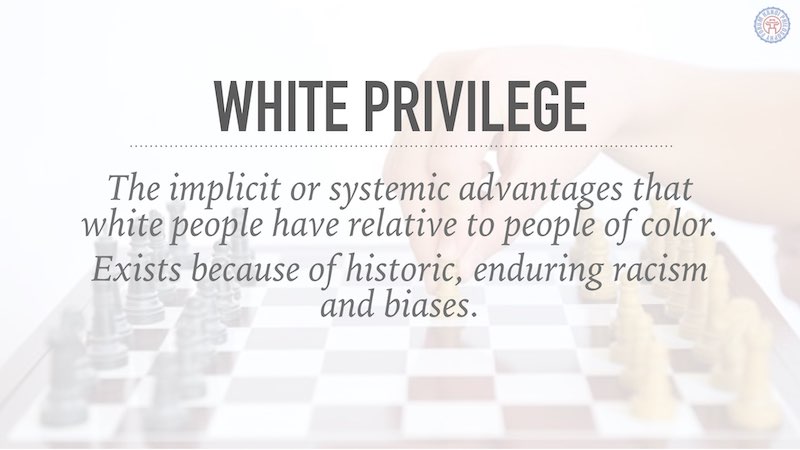
The Idea of Privilege

My Assessment
I've spent a great deal of time contemplating the idea of privilege.  As a white person, I'm often told I have always had privilege.  As an American I'm often told I have always had privilege.  I've been exploring this, wanting to give the idea of my privilege the attention it deserves, and assess how it affects my view of things.

First, I do absolutely agree that the idea of "white privilege" exists.  I also agree that sometimes, especially when dealing with racists, I hold a great deal of white privilege.  It ends there, however.  I've never been given anything because I am white.  No doors or opportunities have opened because I am white.  No economic benefits have been mine because of my race.  That said, I do know that sometimes happens.  It just hasn't happened in my world.

Growing up white and poor isn't really all that different from growing up black and poor.  You simply don't have what others have; not because of your race but because of your circumstance and in this case color does not directly affect my circumstance.  In fact, when race is factored in, I have had certain DISadvantages. 

First, there is the idea of giving opportunity as part of quotas and "affirmative action".  I believe that programs like this have run their course of usefulness.  It's time that we are all treated equally.  If a person of color is more qualified (or more needy, depending on the award) then by all means that person should be chosen over me.  I come from an era where persons of color were given priority in college placement and financial aid.  I wasn't privileged beyond having the guts to try college anyway.  That is not racial, that is environmental.  My upbringing, and to a certain extent my culture, made me tough and curious.  That isn't racial.

I'm told, in argument, that my culture is what gave me privilege.   If poor West Virginia is privilege in any color, I will eat my hat.  There are, of course, pockets of privilege culturally--some because of being white, some because of not being white, but generally, my "culture" gave me no privilege.  There are a great many black West Virginians my age who are far more successful and accepted than I am.

Some argue privilege in expectations.  They say white persons are expected to be successful and black persons are not.  To an extent, that might be true, but there are other sides of that.  Because I was a smart white teenager with a great deal of "drive" it was expected that I would attend college, graduate (probably with honors) and go on the have a financially successful life. There's a lot of pressure there, and I wasn't up to it.  That was 40 years ago, and right now, being a smart, driven black person has a better chance than I ever did with a bit less expectation because we are conditioned to believe that person is somehow disadvantaged.   Combined with quotas, this person of color *may* actually have more privilege than I did; and far less pressure to succeed.  When a person of color doesn't succeed as expected, they (and many others) can play the race card-"I was destined to fail because of my color".  No, the truth is we all fail at some point.  I failed college quite grandly, regardless of race.  I also watched persons of color with lesser academic credentials be accepted into universities I couldn't get into; because of color.  I watched persons of color be handed financial supports I wasn't entitled to; because of color.

Fast forward to adulthood, and when things went south in my marriage nobody ever said it was because either of us were black.  When I moved with my two small children to a trailer outside of town, I wasn't allowed to live there because I was white.  I didn't get welfare because I was white.  What I got was massive amounts of disappointment and judgement.  Thirty years ago even an abused white woman was expected to succeed-because she was white.

Twenty years ago, with a new husband and lots more experience and maturity, I started a new life in Toronto, Ontario.  It quickly became apparent that there were vast numbers of people of color and not quite so many white, at least in my environment.  Less than ten percent of the families in my high rise apartment building are white.  My son has never been in the majority in school or in play.  Being white has not afforded him any privilege.  In fact, because he is white, some persons of color have targeted him for theft or bullying because they have been taught that white people have things that black/brown people don't.

Citizenship is also an issue.  Because I am an American, and right now that's not very popular thanks to the sitting president, I am sometimes bullied.  My daughter, who is white as snow and 110% southern american, has had it far worse than I have because she was a teenager here.  I have never seen a person of color bullied because of their immigration status or citizenship.  Here in the GTA, the group with the greatest amount of "privilege" would have to be Asians.  Overall, Chinese and Indian and Pakistani and Korean  have a much better life than the rest.  I don't hold that against them--they have families and others who give direct support because of their culture, not their race.  They work hard, invest well, and take care of others.  I can certainly see, however, why they are thought of as privileged; they own most of the business and property in the GTA.

It is that culture of support that I believe gives success. Everyone who has needs that aren't being met is likely to see the "haves" as having some kind of privilege.  Because we have a comfortable income (because we don't own property, primarily) I can see how people would think we are privilege. That's jealousy.  That's a fairly normal reaction, give the circumstance.  Those on the outside haven't seen our struggles to get where we are and the challenges we face every day to maintain that standard.

I have a friend who is extremely successful.  He is mid 30's and mixed race, but definitely considered a person of color.  He already has a six figure income, has traveled the world and excelled in his academics.  He may have had more privilege than my daughter of the same age, but not because of race.  He had it because his parents, a white woman from the Canadian prairies and a black man who immigrated from South Africa during Apartheid, worked hard to give him the things they didn't have.  Likewise, that same daughter of mine, has a house, is expecting a second child, and does not have to work because her husband has a great job.  She may be viewed as privileged because of all that; so many others don't have the opportunities she has had.  Those opportunities, however, were not because she is white.  To claim she has "white privilege" takes away validation for rising above her failures, meeting challenges head on, and being successful in the face of almost assured failure.

I think it's past time for us to stop throwing accusations of racial
privilege.  If we want to be treated equally, we have to present ourselves as equals.  When you devalue yourself because you think others have had more opportunity than you have, you fail from the outset.  When you devalue others the same way, you alienate them from every being supportive of you, regardless of color.

If we want to be treated equally, we need to truly treat (and perceive) others as equals.  I don't argue that white privilege doesn't exist.  Certainly in some circumstances, especially in law enforcement and bigots, it most certainly does.  My objection is to  a sort of "reverse racism" where all white persons are viewed as having privilege over all persons of color.  Just as bigots need to learn a better way, persons of color who are feeling disenfranchised need to truly assess what causes them to feel that way.  We need to start talking about "isms" that don't involve color.

This is privilege.

This is not.

Saturday, April 6, 2019

Loss

No witty title for this one.

This morning I chatted via Facebook with a young friend who is going through a sudden and unexpected breakup.  His boyfriend is having issues--big ones, like homelessness, and this is perhaps for the best really.  But nobody wants to hear that while they are grieving.  All I could really do is affirm that his feelings are valid, that he is an attractive person, and that he is absolutely still worthy of love.

That got me thinking.  There are lots and lots of losses in our lives.  Lord knows I've had most of them in my 57 years.  Underneath all of them-every single one-is the loss of what was expected.  When we lose a relationship, even if it is our choice, the loss of the expectation of lifelong companionship (and often much more) can be devastating.  When we move, the loss of familiarity, even if it was a crappy existence, is still painful on some level.  When we lose a parent, the loss of that solid rock, or maybe the loss of the opportunity to make everything "right" with them, goes on forever.  When we lose a child, we lose watching all that they would have become.

It's hard to focus on anything outside that pain, at least at first.  We always take it personally-almost narcissitically, and we go through all the stages of grief.  When we support others in their loss,  we have to first understand that right this second, when the loss is fresh and oozing, there is no solace.  Not one bit of it.  Nobody and nothing can take that pain away.  Like a skinned knee, it has to have some time to scab over so that the real injury can begin to heal.

Most of us though have a really bad habit of picking our scabs.  They itch, or we think they look ugly,
or maybe we think the healing is done so the scab must be removed.  We don't think about it at the time, but if we pick at our scabs, the risk of infection is very real.  So it is with life losses.  When we keep our focus on them, when we pick at them all the time, we are asking for worse.  When we open up we risk the opinions of others, or our own negativity, or the cultural grime we live in, making our wound infected. Eventually it turns to a nasty puss that if left untreated can quite literally kill us.

We have to treat loss like an open flesh wound.  We have to pamper, shelter and treat the wound so it doesn't kill us.

Some people are more vulnerable to infection than others.  Think of your immune system.  If you don't make a lot of antibodies, your healing is really really slow.  If you're healthy you may never even be tempted to pick a scab because it heals quickly and doesn't cause us much trouble.  Our past histories are how we build the antibodies.  Once exposed, we are later stronger and more immune when the disease comes around again.  Bd relationships are like the flu; they mutate and the next time it comes around you are immune to most of it but there's that mutation that makes it start again.  "Chicken soup" from others will help us get through the flu but it doesn't cure it or eradicate it from the planet.  A bandaid over our skinned knee protects it somewhat, but we still have to tend to it with neosporin or at least soap and water.  Sometimes even when we do, it still manages to get infected.

So what do you do if you get infected?  Even the most healthy folks occasionally are given a wound that just will not respond to whatever it is we are using to treat it.  Our wounds start to ooze, and we feel worse and worse until we go get it checked.  The doctor can give ua antibiotics and maybe even clean it up a little.  It might be more painful initially, but it will only benefit us in the long run.

So it is with counseling services.  Whether it is from your minister, or a therapist, or even a good friend, we need to reach out to an "expert" to aid our healing.  The deeper the wound, the more experience and education we need to find in our "doctors".  We have to actually believe we are not going to die from this.  We have to ask for and accept the appropriate help.  We have to do the whole treatment plan.

Eventually, all that will be left is a scar.  Scars, even emotional ones, do two important things.  First, it prevents you from getting the same injury in exactly the same way.  We are at least partially protected.  Second, that scar serves as a reminder that you DID heal and you won't put yourself in the position to get injured in that way again.

I have a lot of scars, inside and out.  I've learned to celebrate them as a survivor.  I've grown from each experience, no matter how painful.  You will too, if you do the healing work involved.  You'll  never get a scar until you quit picking at the scab.  And those wounds we pick at, or that run very deep, will leave a much bigger scar.  Honor that.  Know that the bigger the scar, the bigger the recovery has been.

If you find yourself with a pain you can't fix, or a wound that won't heal, see a professional.  They are better prepared to help you heal.  If they offer you helpful drugs, take them.  If they tell you to rest, whatever that means for your particular injury, rest.  And don't forget to go back after  you heal for a checkup.

You got this.

Greta's World

I've been thinking a lot about Greta Thunberg.  She will be 17 in a couple of weeks and is an amazing young activist.  Hats off to her p...