Showing posts with label Citizen. Show all posts

Wednesday, November 20, 2019

Really Bad Car Wreck

No, not mine.  I'm talking about the Presidency of Donald Trump.


There are a lot of similarities though.  Sure I was on a busy highway but never expected to be hit because I was being careful.  Such was the 2016 election.  We knew he was running but nobody expected he would actually get elected. Nobody took his candidacy literally-he'd been a democrat, he is a failed businessman, and his personality was never conducive to being a world leader.

Then BAM!  We were struck while unsuspecting.  We got rear-
ended, as it were.  At first we didn't understand how it happened, or what impact it would have on our daily lives.  It took time for the real damage to show itself.  Like my own brain injury, the country couldn't make sense of much, and our personality changed.  We forgot things.  We couldn't find the right words.  Our self esteem was damaged as well.  We went into a deep depression and were unable to function like we needed to.


Now, years later-in my case two, in his case three, we've had a chance to understand what happened and what the effects were.  We've started to see more clearly.  We've asked questions of the experts so that we can fully understand what is happening.  We've healed enough to come out of our blue funk and walk, crippled, into life again.  We do it with the goal of not just being functional, but being better than ever.  Stronger.  Smarter. More resistant.

We, my fellow Americans and I, have plateaued.  We're not healing any more, or at least are healing very slowly.  New injuries are coming to light that have to be dealt with.  New strategies for a return to what we once were have been embraced.  It's excruciatingly slow.  We continue to do our necessary therapy but it's simply a matter of survival.  Like I have, it is time that my countrypersons fight back.  Resist. 

It is also imperative that the person who caused this life changing, nearly deadly, car wreck is held accountable.  Maybe there's no financial reward, but there is a satisfaction in making our point and maybe preventing the perpetrator from harming someone else.  That's what this impeachment is about-holding accountable a person who injured us, possibly permanently.  The physical injuries will heal, but the post-traumatic stress disorder will have to be dealt with for quite some time.

Don't ignore that.  As certain as I am about my name, I know that the US is suffering from PTSD regardless of where your political leanings lie.  Republicans are injured just as much as democrats.  We are all Americans.  We need to work together to heal both sides.

I'm driving again, at least during the daytime.  I still have a great deal of pain and my mobility is limited.  There are things I can't do, but have learned to reach out and ask for help.  Americans must do this as well-as individuals as well as Americans in general.    We must take as many precautions as possible to keep from being inured in the future.  We have to get back into that which traumatized us.  We have to survive, and we have to heal, and we have to get back to the people we were before this accident.

I do think of it as an accident.  It happened when we got lazy and
weren't looking, which makes us as culpable as the perpetrator.  Even radical Republicans got broadsided by who they thought would be their savior.  Be kind to each other.  Heal.  Don't rip the scabs off.  Seek help from professionals.


Don't let this kick you in the ass for life.

Tuesday, August 6, 2019

The Idea of Privilege

My Assessment
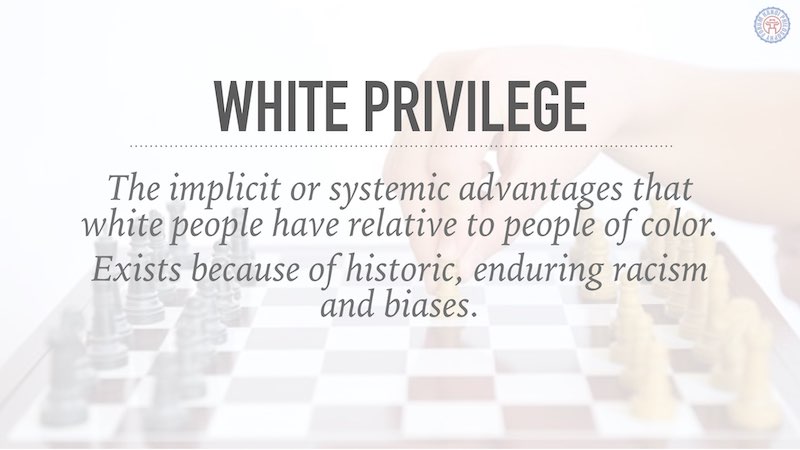
I've spent a great deal of time contemplating the idea of privilege.  As a white person, I'm often told I have always had privilege.  As an American I'm often told I have always had privilege.  I've been exploring this, wanting to give the idea of my privilege the attention it deserves, and assess how it affects my view of things.

First, I do absolutely agree that the idea of "white privilege" exists.  I also agree that sometimes, especially when dealing with racists, I hold a great deal of white privilege.  It ends there, however.  I've never been given anything because I am white.  No doors or opportunities have opened because I am white.  No economic benefits have been mine because of my race.  That said, I do know that sometimes happens.  It just hasn't happened in my world.

Growing up white and poor isn't really all that different from growing up black and poor.  You simply don't have what others have; not because of your race but because of your circumstance and in this case color does not directly affect my circumstance.  In fact, when race is factored in, I have had certain DISadvantages. 

First, there is the idea of giving opportunity as part of quotas and "affirmative action".  I believe that programs like this have run their course of usefulness.  It's time that we are all treated equally.  If a person of color is more qualified (or more needy, depending on the award) then by all means that person should be chosen over me.  I come from an era where persons of color were given priority in college placement and financial aid.  I wasn't privileged beyond having the guts to try college anyway.  That is not racial, that is environmental.  My upbringing, and to a certain extent my culture, made me tough and curious.  That isn't racial.

I'm told, in argument, that my culture is what gave me privilege.   If poor West Virginia is privilege in any color, I will eat my hat.  There are, of course, pockets of privilege culturally--some because of being white, some because of not being white, but generally, my "culture" gave me no privilege.  There are a great many black West Virginians my age who are far more successful and accepted than I am.

Some argue privilege in expectations.  They say white persons are expected to be successful and black persons are not.  To an extent, that might be true, but there are other sides of that.  Because I was a smart white teenager with a great deal of "drive" it was expected that I would attend college, graduate (probably with honors) and go on the have a financially successful life. There's a lot of pressure there, and I wasn't up to it.  That was 40 years ago, and right now, being a smart, driven black person has a better chance than I ever did with a bit less expectation because we are conditioned to believe that person is somehow disadvantaged.   Combined with quotas, this person of color *may* actually have more privilege than I did; and far less pressure to succeed.  When a person of color doesn't succeed as expected, they (and many others) can play the race card-"I was destined to fail because of my color".  No, the truth is we all fail at some point.  I failed college quite grandly, regardless of race.  I also watched persons of color with lesser academic credentials be accepted into universities I couldn't get into; because of color.  I watched persons of color be handed financial supports I wasn't entitled to; because of color.

Fast forward to adulthood, and when things went south in my marriage nobody ever said it was because either of us were black.  When I moved with my two small children to a trailer outside of town, I wasn't allowed to live there because I was white.  I didn't get welfare because I was white.  What I got was massive amounts of disappointment and judgement.  Thirty years ago even an abused white woman was expected to succeed-because she was white.

Twenty years ago, with a new husband and lots more experience and maturity, I started a new life in Toronto, Ontario.  It quickly became apparent that there were vast numbers of people of color and not quite so many white, at least in my environment.  Less than ten percent of the families in my high rise apartment building are white.  My son has never been in the majority in school or in play.  Being white has not afforded him any privilege.  In fact, because he is white, some persons of color have targeted him for theft or bullying because they have been taught that white people have things that black/brown people don't.

Citizenship is also an issue.  Because I am an American, and right now that's not very popular thanks to the sitting president, I am sometimes bullied.  My daughter, who is white as snow and 110% southern american, has had it far worse than I have because she was a teenager here.  I have never seen a person of color bullied because of their immigration status or citizenship.  Here in the GTA, the group with the greatest amount of "privilege" would have to be Asians.  Overall, Chinese and Indian and Pakistani and Korean  have a much better life than the rest.  I don't hold that against them--they have families and others who give direct support because of their culture, not their race.  They work hard, invest well, and take care of others.  I can certainly see, however, why they are thought of as privileged; they own most of the business and property in the GTA.

It is that culture of support that I believe gives success. Everyone who has needs that aren't being met is likely to see the "haves" as having some kind of privilege.  Because we have a comfortable income (because we don't own property, primarily) I can see how people would think we are privilege. That's jealousy.  That's a fairly normal reaction, give the circumstance.  Those on the outside haven't seen our struggles to get where we are and the challenges we face every day to maintain that standard.

I have a friend who is extremely successful.  He is mid 30's and mixed race, but definitely considered a person of color.  He already has a six figure income, has traveled the world and excelled in his academics.  He may have had more privilege than my daughter of the same age, but not because of race.  He had it because his parents, a white woman from the Canadian prairies and a black man who immigrated from South Africa during Apartheid, worked hard to give him the things they didn't have.  Likewise, that same daughter of mine, has a house, is expecting a second child, and does not have to work because her husband has a great job.  She may be viewed as privileged because of all that; so many others don't have the opportunities she has had.  Those opportunities, however, were not because she is white.  To claim she has "white privilege" takes away validation for rising above her failures, meeting challenges head on, and being successful in the face of almost assured failure.

I think it's past time for us to stop throwing accusations of racial
privilege.  If we want to be treated equally, we have to present ourselves as equals.  When you devalue yourself because you think others have had more opportunity than you have, you fail from the outset.  When you devalue others the same way, you alienate them from every being supportive of you, regardless of color.

If we want to be treated equally, we need to truly treat (and perceive) others as equals.  I don't argue that white privilege doesn't exist.  Certainly in some circumstances, especially in law enforcement and bigots, it most certainly does.  My objection is to  a sort of "reverse racism" where all white persons are viewed as having privilege over all persons of color.  Just as bigots need to learn a better way, persons of color who are feeling disenfranchised need to truly assess what causes them to feel that way.  We need to start talking about "isms" that don't involve color.

This is privilege.

This is not.

Thursday, July 18, 2019

Make it So (How Impeachment Works)


Yeah, that's a lame Star Trek reference.  But the topic is pretty serious. I'm talking about impeachment.  I have a lot of friends who live outside of the USA and have voiced opinions on current leadership.  Most of those people wonder why this president is allowed to continue his divisive actions and say we should impeach.  Some information on that was eye opening for me.

Here's how it works:

The Constitution limits grounds of impeachment to "treason, bribery, or other high crimes and misdemeanors".  Unfortunately it isn't specific as to what "high crimes and misdemeanors".   Alexander Hamilton described impeachable offenses as  “the misconduct of public men, or in other words from the abuse or
violation of some public trust.”  These  were political and harmful to all or most of society.  Impeachable conduct could include behavior that violates an official’s duty to the country, even if such conduct is not necessarily a criminal, prosecutable offense. In the past both houses of Congress have given the phrase “high Crimes and Misdemeanors” a broad reading, “finding that impeachable offenses need not be limited to criminal conduct.”

The purpose of impeachment is not to inflict personal punishment for criminal activity. Impeachment is a remedial tool,  serving to maintain constitutional government by removing individuals unfit for office.  Grounds for impeachment include abuse of the particular powers of government office or a violation of the “public trust” which is  unlikely to be specifically barred via statute.

The House has placed little emphasis on criminal conduct when creating articles of impeachment.  Less than a third of the processes have charged that the subject involves  actual "crime";  rather, they have been removed for drunkenness, biased decision-making, or inducing parties to enter financial transactions.  Articles against Andrew Johnson were based on rude speech that reflected badly on the office and President Johnson had made “harangues” criticizing the Congress and questioning its legislative authority, refusing to follow laws, and diverting funds allocated in an army. These behaviors brought the presidency “into contempt, ridicule, and disgrace.”A significant number have been impeached for behavior incompatible with the nature of the office.

These offenses can be things that happened before the individuals assumed their positions.    Eastern District Judge Porteous was charged for making false statements to the FBI and Senate in connection with his nomination and confirmation.  He was impeached and remove from the court in December 2010.  There was substantial evidence that Porteous  committed perjury by signing false financial disclosure forms under oath which concealed cash and things of value that he  received from lawyers appearing in litigation before him.  He was also charged with soliciting those things of value.  There was substantial evidence that Porteous had repeatedly by signing false financial disclosure forms in connection with his bankruptcy, and had made false representations to get a bank loan with the intent to defraud the bank.  Congress considered this as perjury.

The Constitutional Convention rejected language that would have permitted impeachment for "maladministration." It was argued that the definition was too vague.   Directives issued to Congress have cautioned that the grounds for impeachment don't always fit easily into definitions.  The intent of the punishment of impeachment is intended to “reach a broad variety of conduct by officers that is both serious and incompatible with the duties of the office.”  In 2005,  Congress has identified three general types of conduct that constitute grounds for impeachment, but these categories should not be understood as exhaustive.  Abusing the powers of the office the subject has been appointed or elected to is a big one.  Also exceeding that power, or misusing the office for personal gain, behavior that is "incompatible with the function and purpose of the office.  This is very broad.

Not all criminal conduct is impeachable.  In the proceedings agains President Nixon inn 1974, the Judiciary Committee rejected that he committed tax fraud, primarily because that “related to the President’s private conduct, not to an abuse of his authority as President.”  There were other abuses to list for impeachment of Nixon.

"An impeachable offense is whatever a majority of the House of Representatives considers it to be at a given moment in history."  ~House Minority Leader Gerald R. Ford, 1970
The 2005 "Overview of the Impeachment Process", prepared by the CRS for Congress states that the President cannot grant pardons for offences against the United States "except in Cases of Impeachment."

The process is relatively simple.  The House of Representatives brings Impeachment charges.  ONLY the House can do this.  The bill then goes to Senate, where formal hearings and further investigation precedes a vote.  The Senate then issues a summons for the accused, who may appear in person or by counsel.  That accused can also choose not to appear at all.  If they don't appear, the proceedings move ahead as if a "not guilty" plea was entered.     The accused (or his legal team) then argues that he or she isn't a civil official, or that the charges do not constitute sufficient grounds.   They may answer the charges and the conversation begins.  The House acts basically as a prosecutor, with the Senate acting as judge and jury.  The Chief Justice of the United States presides over this.

It is rare that a federal public official is impeached, but demands for   impeachments, especially in the case of presidents, are common.    This dates back even to the administration of George Washington in the mid-1790s.  The national adoration for Washington was fading, and Americans had learned that a secret treaty negotiated by his envoy John Jay made demands that many found humiliating. This process was a bit of a precursor to the War of 1812 as well as suspected of hastening Washington's death, even though he was never actually impeached.  He did, thanks to the John Jay debacle, vow to not seek re-election.  I don't blame him.  It was ugly.  Read the whole story here.

Federal officials for whom impeachment proceedings were instituted and referred to a committee of the House of Representatives were few.  The first was in 1779  when Tennessee Senator William Blount was charged with conspiring to assist Britain in capturing Spanish territory.  The Senate rejected the bill, and expelled Senator Blount from the Senate on their own authority.  So far only seven Americans have been impeached.  Many more were acquitted, and many resigned before the proceedings went to vote..

Only four US Presidents have so far been brought up for
impeachment.  The first was James Buchannon in 1860, charged with corruption and acquitted.  Eight years later, President Andrew Johnson was acquitted of impeachment for violating the Tenure of Office Act. The next was President Richard Nixon in 1974.  Charged with obstruction of justice, abuse of power, and contempt of Congress was not impeached because he resigned before the proceedings concluded.  Finally, President Bill Clinton was tried on charges of perjury and obstruction of justice.  He was acquitted in 1999.  No President has ever been successfully impeached. although one senator, Blount,  went through part the proceedings only to be removed by the Senate without conviction.   A Secretary of War was tried in 1876 and resigned.  Seventeen federal judges have faced impeachment, but only five were actually impeached;  most of the rest resigned or were otherwise removed.

Where it gets a little murky is removal from office.  Simply being impeached by the House isn't enough to remove someone from office.  The bill has to pass the rigorous trial by the Senate then the Senate has to pass a bill to remove the president and that bill has to be passed by 2/3 vote, which is 67 sitting senators.  The current Senate has 45 Democrats, 53 Republicans, and two independents.  Only twenty five of them are women, and only nine are non-white.  Ninety percent of the congressional members of congress are Democrats.  As for religion, 86 senators are Christian (including 22 Catholics),  four are Mormons, 8 are Jews, one is Hindu, and five are unaffiliated.  There are no Muslim senators, and only three serve in the House of Representatives.  Statistically this is completely different than the percentages of Americans they represent.   Members of the 116th United States Congress (convened on January 3, 2019) introduced 3,160 pieces of legislation; 95 of those received a vote as of March 22, 2019.

When people ask why President Trump hasn't been impeached yet, it becomes more complicated.  First, it's a lengthy process.  It's quite possible that Trump could be out of office before the conclusion. Since a sitting president usually isn't considered for criminal charges according to the Justice Department policy (the Constitution doesn't address this), he would have to be impeached first, then charged after he was removed.  I doubt the charges would hold up at that point for two reasons.  First, it can probably be argued that the criminal courts don't have jurisdiction over federal employees, and second that conviction after impeachment could be considered "double jeopardy".  It would be tied up in courts well beyond the lifetime of the accused, using valuable time and money without effect.

There are few who detest Donald Trump more than I do, but I get why Pelosi and others are reluctant to move to impeach.  It's a distraction from the real issues (most of which were created in the current administration, in my opinion) and ultimately would not be successful before the next election.  If tampering or brainwashing is successful in re-electing him, that would certainly give more time o make him the first President to be impeached.  Plus, if they don't impeach him, the door is open for criminal charges when he leaves office.  My heart screams "Impeach" but my head says it's pretty pointless and the energy should be spent on more effective means of ending his tirade dictatorship fascist totalitarian Presidency.


https://www.senate.gov/reference/resources/pdf/98-806.pdf
https://www.congress.gov/bill/111th-congress/house-resolution/1031
https://en.wikipedia.org/wiki/Thomas_Porteous
https://www.americanheritage.com/impeach-president-washington
https://www.reuters.com/article/us-usa-trump-russia-indictment-explainer/can-a-sitting-us-president-face-criminal-charges-idUSKCN1QF1D3
https://www.thoughtco.com/impeachment-the-unthinkable-process-3322171
https://ballotpedia.org/116th_United_States_Congress#Analysis
https://www.senate.gov/senators/EthnicDiversityintheSenate.htm
https://www.pewresearch.org/fact-tank/2019/02/08/for-the-fifth-time-in-a-row-the-new-congress-is-the-most-racially-and-ethnically-diverse-ever/
https://www.pewforum.org/2019/01/03/faith-on-the-hill-116/


Tuesday, April 2, 2019

Finally an American

My son and I went to the US Consulate in Toronto this morning.  It could have been awful.

Since we were unable to get his Social Security number at the SS Office in Dubois, PA (long story that ends with me storming out in tears), we had to get the boy a US Passport.  Ironically, the exact same ID we tried to use for Social Security to prove citizenship and were denied, we quite fine to get a passport.  That document would be the Consular Report of Birth Abroad.

This is a document, or more accurately a certificate, that says that your child is a US Citizen by virtue of a parent being a citizen.  This Canadian birth certificate certifies he is Canadian.  It's rather convoluted but when it all comes out in the wash, he has dual citizenship.

This led to a discussion at lunch with my Canadian husband.  I maintain that our son can never be President (not that he wants to be) because he was not born in the USA.  Hubby countered with "What about Ted Cruz?"  Well he has a point.


Senator Ted Cruz was born in Calgary, Alberta, Canada to a US Citizen mom.  He ran for President of the United States in 2016.  He is the Senator from Texas who recently beat out Beto O'Rourke in Texas for his Senate seat.  O'Rourke, of course, is now running for President himself.


Cruz claims he didn't know he was a dual citizen until 2013.  


This conversation caused me to rush home to do more research.  As it turns out, most legal scholars agree that includes an American born overseas to an American parent, such as Cruz.  Dated Dec. 22, 1970, which is about a month after his birth, it shows that Rafael Edward Cruz was born to Rafael Bienvenido Cruz, born in Matanzas, Cuba, and  Eleanor Elizabeth Wilson, born in Wilmington, Del.  This act made him an American, and being born in Calgary made him a Canadian.  My son, born in Toronto, has exactly the same "credentials", minus dad being born in Cuba.  U.S. law required at least one parent who was a U.S. citizen who had lived for at least a decade in the United States.  Mrs. Cruz and I both fit that condition.  My daughter's child might as well, but son's children will not get immediate citizenship unless he lives in the US for at least ten years.

To further complicate matters, until 1947, people born in Canada were British subjects.  This is one of the challenges to my taking dual citizenship.  My ancestors fought and died in 1776 to be free of Britain.  Can I morally swear allegiance to the monarchy?  When I talk about this to Canadian friends, they laugh it off and some are even stunned to discover that they have, by birth, sworn to uphold the Monarchy.  They say since they didn't have to swear an oath of citizenship, they didn't make that promise.  This is very telling, when it comes to why they don't "get" my reluctance to swear it.  Canada has only been independent from Britain since July 1, 1867.  The Canada Act 1982 which was passed in Britain at the request of the Parliament of Canada, ended power of the British Parliament to amend the Constitution of Canada. It also ended legislation from 1931 that gave the British parliament the general power to pass laws extending to Canada.  Technically, in my opinion, it was at that point that Canada actually became independent.  As of this writing, that was only 37 years ago.  Much too soon to have it's people develop the kind of patriotism known in fifth generation (or longer) Americans.  Heck, they've only had one Queen!  If you really want to get some Canadians riled up, just remind them Queen Elizabeth's constitutional powers over Canada were not affected by the act, and she remains Queen and Head of State of Canada.  Her assent is required on all Canadian laws.

But I digress.  Both confer citizenship automatically to anyone born on land, and to children of citizens even when the birth takes place overseas.  That's how Ted Cruz and my son ended up in this mess.  Ted's reaction was very different from my son's.


 Alberta-born Sen. Ted Cruz has given up his Canadian dual citizenship. The renunciation became official on May 14, roughly 9 months after he learned he wasn't only an American.


This seemed to help settle the political part of this conundrum.  He is now only American.  Does that also entitle him to be president?  By law, he could also be granted citizenship of Cuba. Cuba does not recognize dual (triple?) citizenship, so any other citizenships would have to be renounced to even BE Cuban.   It wouldn't be much more than some paperwork.  Because his parents never filed the form to make him officially Cuban, he dodged the bullet, although in my generation of Bay of Pigs, being Cuban is definitely worse than being Canadian.  Cruz was 4 when the family moved to Texas.

In 2006, Canada’s Liberal Party Leader Stéphane Dion — born in Quebec City and also a citizen of France.  He promised to give up his French citizenship if he became prime minister.  He didn't become Prime Minister.

The US requires its citizens to pay taxes no matter where they live in the world. Canada only taxes people who reside there.  The two countries have an agreement that taxes paid to Canada offset taxes owed to the US, to a large extent.  Everything still has to be reported to the US and taxes will be collected on things that Canada doesn't tax.  Americans can also still draw Social Security, regardless of where they live and working in Canada does "count" toward the quarters worked to earn Social Security in the US as well as the Canadian Pension Plan.  This is good news for me because I probably won't even qualify for CPP since I haven't worked much in Canada.  Another good thing about Canadian CPP is that I get credit for the years I was a stay at home mom.  

The U.S. Constitution requires a president to be a “natural born” citizen. Most of us always believed that this means being born on American soil. But Cruz was entitled to American citizenship at birth. Because of that, a strong legal consensus has emerged that Cruz is, in fact, eligible.  Ironically, that is also the fact for President Obama  Cruz's Republicans claimed he was born in Kenya, but even if he was, since his mother was American, Dr. Obama would still be eligible the same way Cruz is.   

In any event, my son is now completely and officially, an American.  He's not terribly thrilled about that, given the current political issues in the US.  Telling him he could now vote definitely brought him quickly to accept this newfound citizenship, but he still has to register for the draft.  That didn't sit well with anybody but me.    I would gladly give my life for my country.  I wonder how many of those people pushing for me to hurry up and get Canadian citizenship can say that.

My son now has the best of both.  He will have twice as much opportunity, twice as much marketability, and twice as much history.  He has my Scots/Irish/Appalachian heritage just as much as his dad's British/Ukrainian history.  


Rights of US Citizens   
Immigrant US Green Card holders have a lot of the same rights as full citizens, but not everything. 
1.  RIGHT TO TRAVEL AND LIVE OUTSIDE THE UNITED STATES
 Freedom of movement and travel is protected by the United States constitution.  A green card holder may not remain outside the United States for a period of over one year without risking loss of his green card.
2.  RIGHT TO ENTER AND LIVE IN THE UNITED STATES
A green card holder can be denied entry into the United States on any ground specified by congress. THey can also be deported.  A  citizen cannot be barred from entering the United States.
3.  DIPLOMATIC PROTECTION 
With a US  passport comes diplomatic protection.   Theoretically, if you get in trouble outside of the US, the US Government will in some way get involved if you ask.  They may not get you out of the trouble you are in, but they will at least make sure you are treated fairly. 
5.   RIGHT OF TRANSMISSION OF LEGAL RESIDENCY 
Citizens can sponsor spouses, children, and some others to come live in the US.

There are responsibilities as well.  As an American, no matter where you lay your head you are still obligated.

1.  TAXES 
A United States citizen may be subjected to income tax on all income both in the United States and throughout the world.  
2.  MILITARY SERVICE 
Male American citizens must register for military service and serve if called and qualified no matter where they reside.
3. AMENABILITY TO AMERICAN LAWS 
In some cases, American laws may apply to United States citizens living abroad as well as where they are charged.

As far as I'm concerned, American Citizenship is the best gift I could ever give my son.


research links:
https://en.wikipedia.org/wiki/Ted_Cruz
https://www.dallasnews.com/news/politics/2014/06/10/no-canada-sen-ted-cruz-has-formally-shed-his-dual-citizenship 
https://www.dallasnews.com/news/local-politics/2013/08/18/dual-citizenship-may-pose-problem-if-ted-cruz-seeks-presidency
https://www.history.com/this-day-in-history/canadian-independence-day
http://www.legislation.gov.uk/ukpga/1982/11/pdfs/ukpga_19820011_en.pdf
http://www.apsanlaw.com/law-10.Basic-Guide-on-Becoming-a-Naturalized-US-Citizen.html


Greta's World

I've been thinking a lot about Greta Thunberg.  She will be 17 in a couple of weeks and is an amazing young activist.  Hats off to her p...